Showing posts with label India. Show all posts

Monday, June 14, 2010

Combining my new love of street art with my love of India - who knew?


PURE BANKSY.

And for a while now I've been a tad in love with Banksy. The devilishly good looking man from Bristol. (He remains anonymous but I just have a gut feeling that someone so amazing must be an English version of Brad Pitt.) Banksy makes powerful political statements with spray cans on walls. It's so simple. It's so powerful. It's so illegal. And that's a little bit hot. In fact, I could only love Banksy more if he was Indian. The only thing I love more than a good bit of silent protest and activist style is India. India trumps everything. Even Banksy.

But then street art and India collided in a bubble of blissful colours to excite me. Unnaturally.

It started with the embarrassing faux pas of a few overly keen cleaners in Melbourne. Painting over a priceless piece of art. Luckily these people don't moonlight as cleaners at the Louvre. Cleaners painted over a Banksy. The last remaining Banksy in Melbourne town. It was only a rat and lacked any deep political message.. however it was a Banksy. This atrocity even made the news over in my beloved Mumbai in the Mirror: here.

Just when I thought all hope for Melbourne's streets was lost, @vineet1 shared some deity goodness on twitter. He found a fluorescent, kitsch and fabulous ode to Ganesh adorning a laneway in Melbourne.


FLINDERS LANE GANESH LOVE FROM @VINEET1.

And with this Indian afternoon delight fresh in my mind, I adventured out to @acmionline to see Banksy in all his scheming, delightful goodness. If you haven't seen Exit Through the Gift Shop, you need to. It's a rare occasion when I recommend something that doesn't involve Bollywood stars inappropriately thrusting their hips - but even without one of the Khan men, this film is superb. It got me inspired to get out a spray can and adorn the streets. I started thinking how powerful these messages would be if they were focused on issues that people don't think about in their daily drills. Imagine if they confronted passersby and silently evoked a protest from them? Street art could change the world. And it could certainly change India.


C215 WORK IN KAROL BAGH, DELHI.

And then I found someone who was already changing India. It wasn't Banksy. It was (gasp) a Frenchman. C215. Spray can in hand, he travelled off to India to spread his creativity and ideas with the people on the streets.

His work above breaks my heart. I don't know who she is. But I think she represents the millions of child labourers in India. She could be any one of the children living in brothels I met in Delhi. She could be one of the children who wake punishingly early to explore rubbish piles in the hope of finding discarded items that they can resell onto recyclers. Whoever she is, C215 obviously recognises that there are many children in India who live in slavery. Poverty, labour exploitation, poor health. She is staring longingly at the padlock as if willing us to open it for her. It's a tad haunting. And it begs the question, are we going to unlock it for her?

Not all his artwork is so deep. Some pieces are just comical observations of Indian life. But, you should definitely check out his flickr account here.


C215'S WORK IN KAROL BAGH, DELHI

And while I love Banksy and C215, I can't help thinking that what could be really powerful is if local people were given spray cans? Vulnerable people, exploited people - they are often voiceless. Street art could become a platform for their ideas to be spread.

Next time I head to India I'm packing paint.

Monday, January 11, 2010

Weekend Escape to Pune


Saw Indian history first hand.

Love the 6th century AD and what it did for Indian palaces.

Obsessively.


Saw Indian rural farming life first hand.

Love sugarcane and primitive tools.

Endlessly.


See some weekend escape snaps here.

Thursday, January 7, 2010

Bombay Tiffin-walas

Brett Louise is ready to kill anyone who obeys Indian Standard Time. Unfortunately that may necessitate me killing 90% of the Indian population out of sheer frustration. As someone who runs habitually twenty minutes late I thought I was going to lovingly embrace the Indian Standard Time mentality. But no. Indian Standard Time means that no meeting times are honoured. No taxi will pick you up on time. And no art gallery opens when it says it opens. Unpredictable chaos. Waiting three hours for a meeting to start doesn't fit in with my usual fashionably late attitude.

So imagine my surprise when I found out about the mysterious Bombay Tiffin-wala Brigade. Something in India actually runs on time. Precisely on time.Tiffins are metallic containers that stack up and lock in together. Something like a primitive thermos. But more exciting as you have layers of delicious delicacies to discover inside. It's essentially the Indian lunchbox. At work everyday, the staff open up their tiffins and eat up the yummy curries, dahl, rice and breads inside. But how do they get to work - on time and still hot? The answer to this questions revealed to me the secrets of the Bombay tiffin-walas.

Every morning mothers, wives and domestic helpers cook elaborate lunches for their husbands, children and bosses. These are packed away lovingly into the tiffins. (It's probably important to note here that each tiffin looks exactly the same - all stainless steel.) At around 9:30am in the morning the tiffins are collected from homes all around Mumbai by tiffin-walas. These men don't have cars or trucks. They have primitive wheelbarrows and carts to carry them. The tiffins are all brought to local stations where they are sorted and sent off speedily with other men to other parts of the city. By lunchtime, the tiffins have arrived (still hot!!) ready to be enjoyed by their owners. After lunch a tiffinwala collects the tiffin takes it away where it is put together with all the other tiffins from Bombay where it is washed. After being washed another tiffin-wala returns the tiffin home to be used again the next day.


Over 4000 tiffin-walas take over the city as they deliver over 175,000 tiffins every day.

No, the tiffins are not just rotated to anyone. Your specific tiffin with your specific meal is picked up, delivered, washed and returned to you.

No, they are never misplaced.

No, they are never late.

How? I have no freaking idea.

If only everyone could adopt this predictable attitude I wouldn't have to go on a murderous rampage.

Monday, December 21, 2009

Playing Dress-ups


Another day, another slum community. And that doesn't imply that I'm over it at all. I am loving it crazy in fact. I am loving meeting beautiful, welcoming people who are keen to share their lives with their odd, loud Australian visitor with a famous cricketer's name. Yes, of course I was named after Brett Lee.
Went to visit a different rehabilitated complex today. Similar buildings with the same India smell. Today I was there to take part in the community meeting where they would discuss what welfare requirements could be addressed in the next year. The women's group leads this meeting of the community. Serious investment in the women's empowerment by the organisation I'm working with has led to some serious kick-ass girl power in the poorest parts of Mumbai. Before the meeting, we thought we would drop in on a girl my age. Again, my Hindi failed me and I couldn't pronouce her name. Her name is Indi.. something something. Indi it is. Plus, seeing as she pronouced my name as 'Borat' I don't think she'd mind.

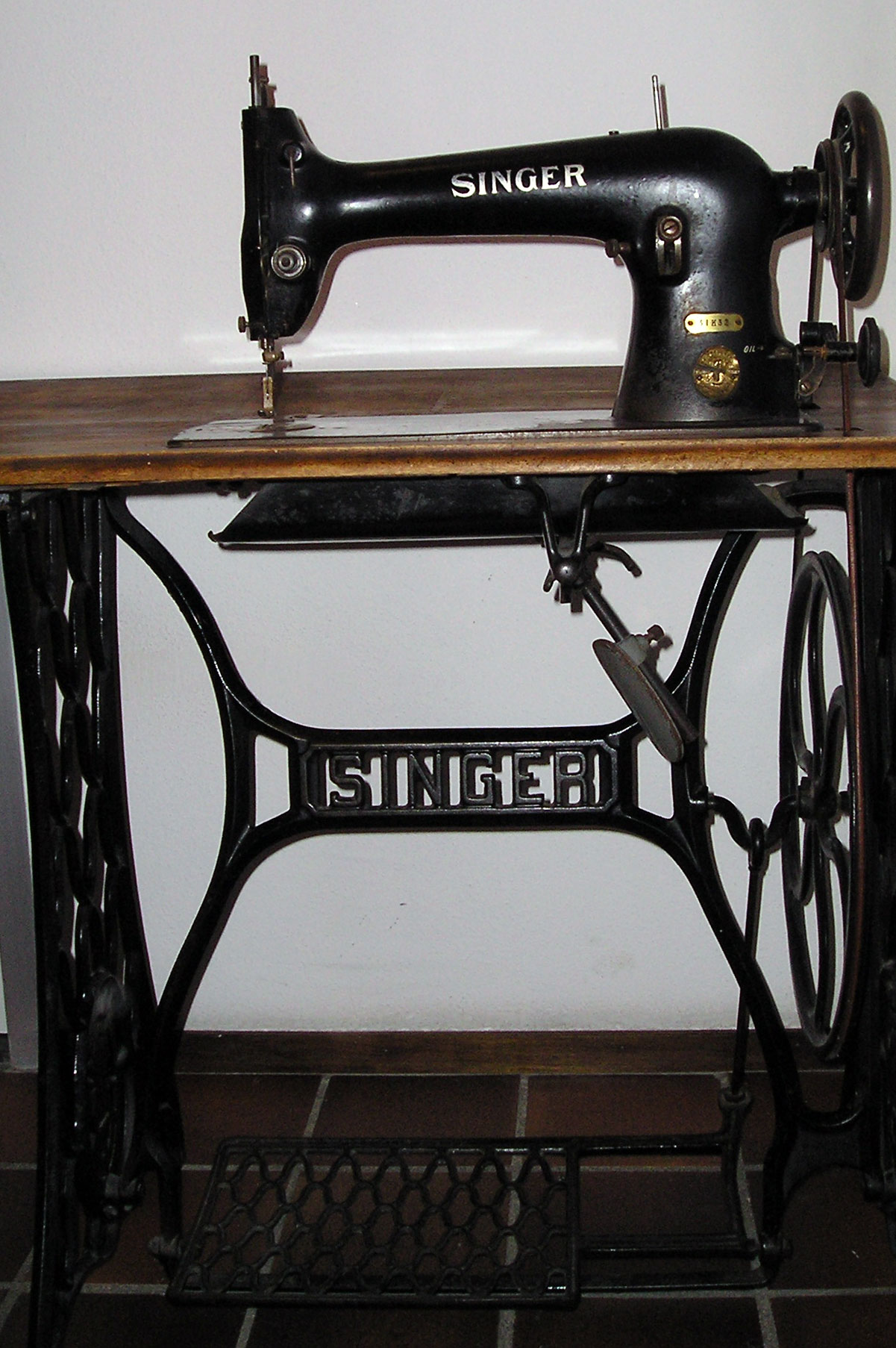
Indi was asleep when we knocked on her door. She was sleeping on the table top in the main living room/bedroom. The apartment was identical to Mrs MK's. But Indi's room that she shared with her family, also doubled as the room she taught sewing classes in. These sewing machines were to die for. One side of the room was lined up with old school singer sewing machines. Drool-worthy. Indi spends her days teaching girls and women how to sew so that they can generate their own incomes as tailors or by making handicrafts. Amongst the sewing machines and a shrine to Ganesh (complete with blinking fairy lights), there was also a hairdressing chair and posters adorning the walls of hip, 1980s hairstyles that American women would have worn. Think Julia Roberts in Pretty Women. Without Hindi I played my usual game of pointing, smiling and laughing.


Indi went to the kitchen and brought back water and peanuts for her guests. Am still a tad uncomfortable with these lovely people with next to nothing want to give you things when you visit them. However, as I have been having withdrawls from my beloved peanut butter, I busied myself de-shelling peanuts at a Guiness Book pace. When I awoke from my peanut frenzy, there was a swarm of young ladies in the room all giggling, plotting and clapping with excitement. Before I knew it I was being motioned towards the hairdressing chair.


So here I am. Surrounded my smiling, excited women. In a chair unable to move. With beautiful Indi above me with a pair of scissors. Was all too excited to play dressups until the scissors came out. If you've seen me in a swimming cap you'd understand why I was worried about the prospect of an extreme haircut. Luckily, in India, long luscious hair is supreme. So I escaped the scissors and instead relaxed for my face massage, make up and hairstyling. Turns out purple lipstick is so in right now. I had my hair braided 'traditional Indian style' although I find it hard to believe that the blue and silver sequined stars that Indi pinned into my hair with sewing pins are overly traditional.


So while loving up my new crazy Indian makeup and hair I didn't see the scissors coming. And I know have a new short fringe bit that keeps flipping onto my face to remind me of the 'traditional Indian hairstyle'. But even that couldn't take away my enjoyment of the hour or so that I played dressups with Indi. There were bridal necklaces, dupattas and noserings to try on. I feel like Indi and I are sisters. Not only does she share my love of peanuts, but once you share a nosering with someone you might as well be blood related.


Such a fun, crazy and unexpected morning.

Sunday, December 20, 2009

A Home of Her Own

After spending the day attempting to complete medical registration forms for the 200 people coming to get free medical and eye care in the rehabilitated slum complex (which would have been a tad easier if I spoke even a word of Hindi!) I was invited into the home of one of the leaders of the women's group. Now, being that my Hindi is non-existent and that these women spoke so fast, I didn't catch this lady's name. But I know it started with an M and her surname started with a K. So to me, she was Mrs MK.

Mrs MK is a strong, proud generous grandmother. She's shorter than me. (Am loving that at 5 foot 4 I am taller than most people here.) Mrs MK took us down a long, dark corridor that smelt like India. It smelt like curry and rubbish and incense. We came to an elevator that looked like the ones used in hotels to transfer food and linen to different floors. After four of us squeezed in we closed the wire door and headed up to the sixth floor. I didn't breathe the entire time as I was too scared that the slightest movement would send us plummeting to the ground. 'You ride in this all the time??' 'Would you prefer to walk the six floors?' Good point. Death ride adventure it is.

Mrs MK's door is painted a bright orangey red. Her door has beautiful crafts adorning it. Like everyone in these 'housing commission' style apartments she is proud of her new home and looks after it superbly. I stepped through the door into the living room/bedroom/dining room/baby's nursery and TV room. No, I didn't walk uber quickly throughout the apartment. I literally stepped into one tiny room that served all purposes for the family of six living inside. It was about 3m x 5m. There was a couch. There was a TV. There were beautiful wall hangings covering the walls. There were images of Hindu Gods. There were pot plants. There was a parrot (yes, after four minutes of me being confused by squeeling coming from inside the wall they were delighted to pull the cage out from behind the couch and giggle at me.)

Mrs MK took us on a tour around her home. It was beautiful. Everything had a place and she took great pride in all of her possessions. It was small. We stepped from the living room/bedroom etc etc into the kitchen. One entire wall was covered in racks that contained her saucepans, plates and cups – all in coordinating tin silver. Jamie Oliver would have been impressed with the selection of utensils. Half of them looked like they should be used for some medical procedure but I guess that is the magic of Indian cooking. The room was about 1.5m x 3m. There was a camping stove on top of the bench as there is no gas in the building. From the kitchen we walked across to the laundry/bathroom/closet/storage area. The laundry was a tub in the corner. There was a medicine cabinet and mirror. And a tiny basin.The family kept their few possessions in this room too. It was essentially a glorified hallway closet. There was also a squat toilet through a door. It was so small I thought that if I wedged my hips through the doorway there was a chance I could get stuck in there forever. I passed on the opportunity to use the bathroom and sat cross legged back on the couch.

Mrs MK was keen to tell us all about her life in the complex. Her family had been there for 10 years and had been happy when her former slum home had been demolished and redeveloped into this block of flats. There were 60 families living in Mrs MK's block and there were a total of 5 buildings in the complex. I looked around this tiny space where families lived on top of each other and felt disheartened by the 'solution' that the government had found to the problem of slums in the city. 'Isn't this just moving the problem upwards? Isn't this just putting a prettier (!!) surrounding on the same problems?' Good questions Brett Louise. Very judgemental, rash conclusions though I found out.

Through a translator, Mrs MK told me that her life was 100 times better now that her family lived in this apartment. I choked on the mango juice I was drinking. 100 times better? Mrs MK's entire family of six (including a newborn baby) sleep on the floor of a room that is smaller than my bedroom and this is 100 times better? Mrs MK then explained that now they have access to running water. They have power. They have clean toilets as opposed to lining up for hours to share common toilets. They also have privacy. That have independence. My original hasty conclusions were quashed when I saw how genuinely happy Mrs MK was. She was happy that she had a healthy young grandchild who would now grow up in a safer environment. She was happy that as a building in the complex they have a society set up to ensure all residents are cared for and supported. They have small shops and businesses they run in the complex to earn an income. They also now have a legal home that they own – as opposed to living everyday waiting for the government or land owners to reclaim land.

After cuddling Mrs MK's granddaughter and doting on her daughter's beautiful saree I left to return to the clinic. I walked out of her beautiful home having learned two things.

  1. Slum life must be hell.
  2. Although my initial conclusion that apartment complex was just moving the same problems into a new shaped building were partly true, when coupled with welfare activities and resident empowerment, these actions were literally changing the lives of the families living there. They were free from slum life.

They had a home of their own.


Floor plan for proposed new flats. Shows how tiny these homes are. The one in the plan is far bigger than Mrs MK's.

Wednesday, December 16, 2009

The real Colaba.


I take it back. Colaba isn't all sunshine, lollipops and drunk tourists. In an attempt to walk to the ocean, (in a place surrounded by water who knew it would be so hard?), we cut up through a side street and through the fishing docks. Turns out that although fish come from the ocean, you can't actually access the water from the docks. And although I wouldn't choose to send my worst enemy into the smell we encountered at the docks, I did see a different side of Colaba.

The fishing wharfs are full of incredibly hard-working, strong stomached locals. They must have strong stomachs as they didn't seem to be dry-retching like we did as they walked through the fermenting fish guts sprayed all over the road in the Indian sun. The docks were a total hive of activity. They were out of control! There were typical Indian, bright painted trucks (the ones that have 'Honk please OK' in colourful cursive on the back) who drove up and down couriering loads of fish bits away from the docks. The fishing boats are similarly colourful. They are also incredibly small. Hope they don't get rough seas in the Indian Ocean. The majority of workers were women. Beautiful, saree-clad, hennaed women. Their beautiful cotton outfits trailed behind them through the remaining fluidy bits of fish that (thankfully!) aren't able to be sold.

Our impromptu self-guided tour through Mumbai's prime fishing region helped bolster my commitment to not eat fish while I am in India. Even my recentely discovered love of prawns was quickly extinguished as we wandered through the docks. The reason for my sudden disgust is the lack of equipment, hygiene and safety precautions used in the preparation of fish in India. There was little ice. There were flies. Everywhere. And the beautiful saree-clad, hennaed women shelled mountains of prawns while sitting in circles on the asphalt, in the open air and hot sun. No deal.

But although disgusting – tummy turning repulsiveness! - I loved our adventure into the fishing capital of Colaba. It reminded me again of crazy India. Of people running everywhere. Of beautiful coloured cottons. Of laughing, head-wobbling men who are all too happy to talk with / at you. It also reminded me that the Indian labourers work so hard to make such little money.

YAY for Colaba – the home of my chai man, Mondy's (the new, better version of Leopolds), of German tourists and of hard working, local Indians.

Tuesday, December 15, 2009

Mumbai Calling

And so I'm back to the velvet underground.

Wait. Scrap that. There's no velvet here. This is India. This isn't the Fleetwood Mac concert I saw the day before being stuck in transit for 26 hours. This is Mumbai. This is anything but velvet. Mumbai is loud, proud and hot. Very hot. Isn't it winter here? Ha. Indian winter. 33 degrees.

Having never been to Mumbai I had no idea what to expect. Arriving at my new home for the next two months I was disappointed to see that there were no beggars on the street outside my apartment. Disappointed? Really Brett?! That's definitely not politically correct. But India is about poverty right? This next three months is about Brett running away to be in her beloved India and to be with the poor right?

Big. Wake. Up. Call.

Shall have to wait until I start work in the slums on Monday to be back to my comfort zone in community among the poor. Learning very quickly that in my Cosmopolitan Colaba home there are more drunk German tourists than beggars. There are more street vendors selling cheap t-shirts and rip-off perfumes than there are limping children. And there has been a severe absence of Slumdog Millionaire-style blinded children. So no immersion in poverty in Colaba. Have decided there are so few beggars because the wealthy Indians driving their Mercedes and Lexuses would probably not take the effort to swerve around the child beggars. They'd probably just continue driving straight at them as they continue to do with me.

So Colaba isn't poverty central. But a few Kingfisher beers later and I'm in love. I love the energy of the street markets. I love the predictable hoards of tourists outside Leopolds. I love even more that they sell cheap photocopied knock-offs of Shantaram in Leopolds. I love that I've already decided I'm too cool for Leopolds and have found my own bar that I shall love for the next two months. Mondy's. I'm personally going to make it bigger and better than Leopolds. I love the chai vendor around the corner who sells the dodgiest looking, but best tasting 6 rupee chai. I love the men walking on the streets selling balloons the size of small children. NO! I do not want a balloon! I love the kitsch fibreglass, fluro Hindu God knock offs that stupid tourists buy. I love that I am one of those stupid tourists who bought an ugly statue. Essentially, I love my new home.

And although having initially being a tad disappointed/snobby with how 'touristy' and 'removed from poverty' Colaba is, I am embracing all she has to offer. My room mate and I are on a mission to make this literally our home for the next two months. We are planning ways to decorate our humble abode. The balcony will be covered in pot plants, beach chairs, a Christmas tree and fairy lights if we have our way. Although where we would find these items is a mystery. We are committed to making best friends with the bartenders, waiters and shop assistants in our favourite 'local' places so we can become regulars.

Colaba is not going to be the same without us when we leave.

Sunday, September 20, 2009

Welcome to GB Road - home of वेश्यावृत्ति

GB Road is in Old Delhi and it is as chaotic and crazy and you'd imagine. There are rickshaws, bicycles, motorbikes, cars, trucks, cows and ox pulling carts all trying to navigate down the narrow road. But GB Road isn't just famous for its crazy atmosphere and bright colours. GB Road is the most famous red light district in Delhi. And GB Road was one of my first stops in India.


Two or three stories above the street stalls and rickshaw drivers are windows covered by grilles. Between these bars hang women calling down to the streets tempting man to come up and sample their goods. But they aren't selling electronics or jewellery like elsewhere on the street. They are selling themselves.


Walking up the narrow, steep steps to the second floor of a building I could tell by the smell that this wasn't a nice place. As I walked through a narrow opening, I encountered 30 faces all sitting in a room on offer to any paying customers. I felt like I was in a swimming pool change room. Everywhere was tiled. And off the main room there were doors into cubicles - just like the showers at your local gym. The tiny women's shoes lined up neatly outside each cubicle, next to large hastly dumped men's shoes, left me in no doubt as to what occurred in these filthy, dark cubicles.


Half the women we met had their faces painted blue. It was only later when I asked about the makeup that I found out this is the traditional costume of Burma. The women working in a cramped and depressing brothel on GB Road in Delhi had come from Burma. Whether they were trafficked or smuggled I don't know. What I do know is that no person would choose to end up working there. This brothel served the poorest rickshaw drivers and stall vendors in Old Delhi. The rickshaw drivers make little money. Imagine how bad the conditions must be in this establishment if even the lowest paid workers in India can afford to sample the goods??


So how do these women, ranging from 18 to my age, 22, to late 30s end up in such a depressing deadend place? Often they come to work as they have no money to feed their children or their families. Often they have debts they need to work off. But even if they do escape the life of a prostitute on GB Road they are often faced with horrendous challenges as their families and villages shun them for the dirty work they have been involved in. Physically abused inside the brothel they will be emotionally abused and isolated if they manage to leave.


Sounds bad right? Well imagine how bad this situation was for the children - 3 and 4 year olds - I met in the brothel who spent their days watching mummy work. What kind of futures could they hope for? Next post I'll tell you all about the lives of the little children born into life in a brothel on GB Road.


Thursday, September 17, 2009

पटाका


Little Pataka means little firecracker.

Thought it was only appropriate to start my very first post by telling you about the very first child I met in India who I fell in love with. I don't know his name. In fact, I'd spent half an hour in the dirty slum where he lives before I even noticed him. In my defence it was the first slum I'd ever visited and I was so overwhelmed. I couldn't take my eyes off the rubbish, mud, pigs and shacks lining the streets. I was bursting with joy and love for the hundreds (literally!) of people surrounding me and the beautiful, gentle little children desperate to hold my hands.

We were in the Natwantola slum in Kanpur. Kanpur is the dirtiest, filthiest place I've ever been. I entered Kanpur by driving over the mighty mother Ganga river. The river which was black, polluted and nothing like the 'holy' river I had envisioned. Kanpur didn't improve from there. The streets are lined with rubbish. Tonnes of it. Shanties and tarps are strung between and on the mountains of rubbish with tiny children working in the shadows. Kanpur disgusted me. And it was my favourite place in all of India. Haha - quite a jump there eh? Digusting and yet my favourite place? It was my favourite place because it was India. It is exactly what I'd imagined. It was filthy, yes, but more importantly it was alive. There were people and bikes and cows and rickshaws everywhere. The people were darting in and out of shops and roadside vendors. It was so energetic and delightful. And seeing as it was my favourite place in all of India you'll be hearing lots more about it.

But back to this delightful boy it took me so long to notice in a slum in Kanpur. We'd been involved in a large celebration and ceremony and the whole community came out to take part. Now this little boy is tiny. He must be about 6. And this little boy was hidden somewhere in the crowd of 100 children all trying to get as close to us as they can. But then it started raining. And by raining I mean bucketing. Welcome monsoon rains. And to shelter from the monsoon rains we ran to the nearest hut and stood peering out. There was little room and so apart from the 4 Australian visitors pretty much everyone else stood in the bucketing rain staring in at us. And then a cheeky little confident boy pushed through to the front. He was absolutely drenched but curiousity about these visitors from Australia got the better of him and he came up under the verandah shelter to be closer to us. He had the most beautiful smile. He didn't stop grinning the whole time we were there. He didn't speak english. I don't speak hindi. But lucky we did have one thing we could share - mohawks.

Yes, in the drenching rain everyone's hair had been messed up. And this beautiful little boy wanted to impress these visitors so he was busy smoothing down his hair. So imagine how shocked he was when I decided to scruffle it. Instead of getting cross, he just giggled and squealed and smoothed it down again. Having too much fun with this delightful little boy I didn't hear any of the presentation that was happening metres from me. Instead all my attention was focused on teaching this funny little confident boy from Kanpur how to do a mohawk, how to shake your hair out like when removing a motorcycle helmet (yes, you do have to look sexy even in a monsoonal downpour) and how to 'fake comb' your hair like Danny Zuko. He giggled and made faces at all of us and then it was time for us to leave. And all the kids chased after our car waving and laughing. But out of nowhere, just like before, this little boy appeared and made his way to the front. And he ran faster than all of the others. And he ran barefoot in the flooded streets through the rubbish until we left the slum.

This little boy had such energy and confidence even though he was surrounded by illness, poverty and despair. He was a bit of a surprise package! I hadn't noticed him when we first arrived and he was so little it was easy to expect him to be quiet and timid. I look forward to knowing what this little boy with so much fire inside him can achieve.

Little Pataka means little firecracker. I hope you love this little Pataka as much as I do.

20.09.09
Also loving
@GlobeTrek for the Hindi corrections! 'It's "pataka", sounds like "puh-taa-kaa".'